
Why does losing make us bet more?
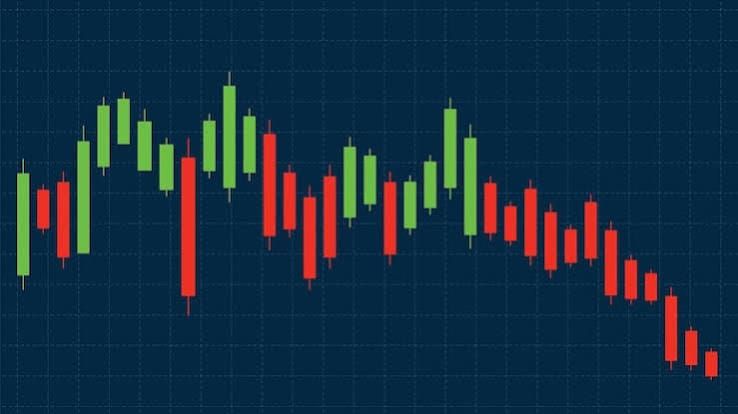
When a trader is presented with a loss or a string of losses, instead of pausing or reducing exposure he might impulsively place trades to feel emotional relief and recover his money. He might even place larger bets than before to get back at the market but as most of you hopefully know, this is a dangerous strategy that usually leaves you in a worse situation than when you started. However, what most of you don’t know is that this isn’t a strategy at all, it's a vicious cycle formed by a confused reward system of the brain.
The question is quite simple yet intriguing: Why would a loss, which should increase caution, often produce the opposite? This phenomenon of revenge trading (impulsively placing trades after a loss/multiple losses, usually larger trades as well) isn’t well explained as a deliberate strategy to “get back to even” because that assumes a rational and goal-oriented agent. This can however be explained by disproportionate responses to losses as compared to gains. In Tom et al.’s 2007 Science paper, when researchers presented subjects with a 50/50 gamble, they found that a broad set of brain regions including midbrain dopaminergic regions showed increasing activity as potential gains increased and potential losses were represented by decreasing activity in several of these same gain-sensitive areas that was higher in magnitude when compared to that of a gain. Critically, individual differences in behavioral loss aversion were predicted by a measure of neural loss aversion in regions including the ventral striatum – a major reward region – and the prefrontal cortex. But this alone doesn't explain revenge trading – Tom et al.’s subjects were evaluating an isolated gamble, not a decision made following a prior loss. The question still remains as to what a loss does to the reference point the next decision gets measured against: rather than evaluating the next trade against zero, the brain appears to re-anchor around “getting back to where I was” which turns an independent trade into a bet to close the gap. These theories, although well-documented and supported, still do not fully explain why the phenomenon is so common and why even disciplined experts are susceptible to it. A study by Luke Clark found that near-miss outcomes activated the ventral striatum even though no gain actually occurred, and compared to full-misses, near-misses increased the desire to keep playing. This reflects either a miscalibrated value signal or an independent motivational signal – the evidence doesn’t fully distinguish between them. This is the reason behind revenge trading being so ‘hard to resist’ even when people know better.