Why do we bet on each other even when its risky?
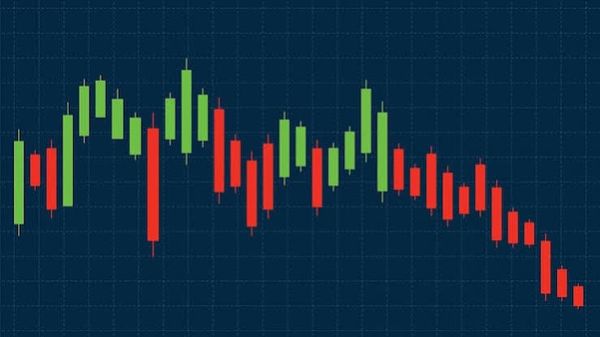
Imagine the following scenario: thousands of traders holding onto a position that is currently losing just because they believe enough people will do the same. This is a fairly common situation during a short squeeze. Most people would just say this is optimism and hope being shown by traders but is that really the case? To some extent, yes, but there is also an unusual involvement of a neurochemical process by the hormone known as vasopressin, modifying people’s perception of risk and reward.
Let’s say you and one of your friends are hunters during the stone age. You both have two choices, either go hunting for a stag or go hunting for a hare. If you successfully hunt a stag, you get enough food for 3 days but this is only possible if you both choose to hunt the stag. If you successfully hunt a hare, you get enough food only for 1 day but you are able to hunt the hare alone as well. You are unable to communicate with your friend prior to making the decision. The question is simple: Do you go for the stag and risk ending up with no food or pick the safer route of hunting the hare but obtain less food? The answer to the stag game is not our matter of concern but what is interesting is how people answered this dilemma when receiving vasopressin. A study by Brunnlieb et al. in which male participants received either arginine vasopressin or a placebo intranasally in two double-blind experiments and made financial decisions in the stag game showed that participants who were given arginine vasopressin were more likely to make the riskier choice than those that were given a placebo. Critics might contend that this could just be a mere coincidence or a matter of psychology and not neuroscience but this is not the case however as the researchers also found a neural mechanism behind the risky decision making. They found that the arginine vasopressin (AVP) down-regulated activity in the left dorsolateral prefrontal cortex – a risk-integration region – when subjects made the risky cooperation choice, while increasing that region’s connectivity with the ventral pallidum – a reward processing region rich in AVP receptors. However this does not mean that vasopressin lowers general risk tolerance as the subjects of the study only seemed to have an increased risk-appetite when presented with risky choices of mutual cooperation. A short squeeze can be modeled as just another form of the stag game. Everyone benefits more if they cooperate but only and only if enough of them cooperate and defecting is a safer yet less rewarding strategy. This means that during a short squeeze, traders are not just being optimistic or hopeful, their brain chemistry is (possibly) actively being altered to evaluate risk-bearing cooperative choices differently. Unfortunately as many skeptics may be thinking already, this theory has very little empirical basis as we are not claiming that we measured someone’s vasopressin during the short squeeze of gamestop, nobody’s done that. The initial study that is being cited here also only had male subjects and not a very diversified sample. We are however using the well-controlled lab mechanism as a lens to explain a real-world problem as an inference, not a causal claim.